Therapy
Speech and language therapy is tailored to the child's age, abilities and individual needs. Its aim is to support the development of speech and communication, as well as healthy functions related to breathing, biting, chewing and swallowing.
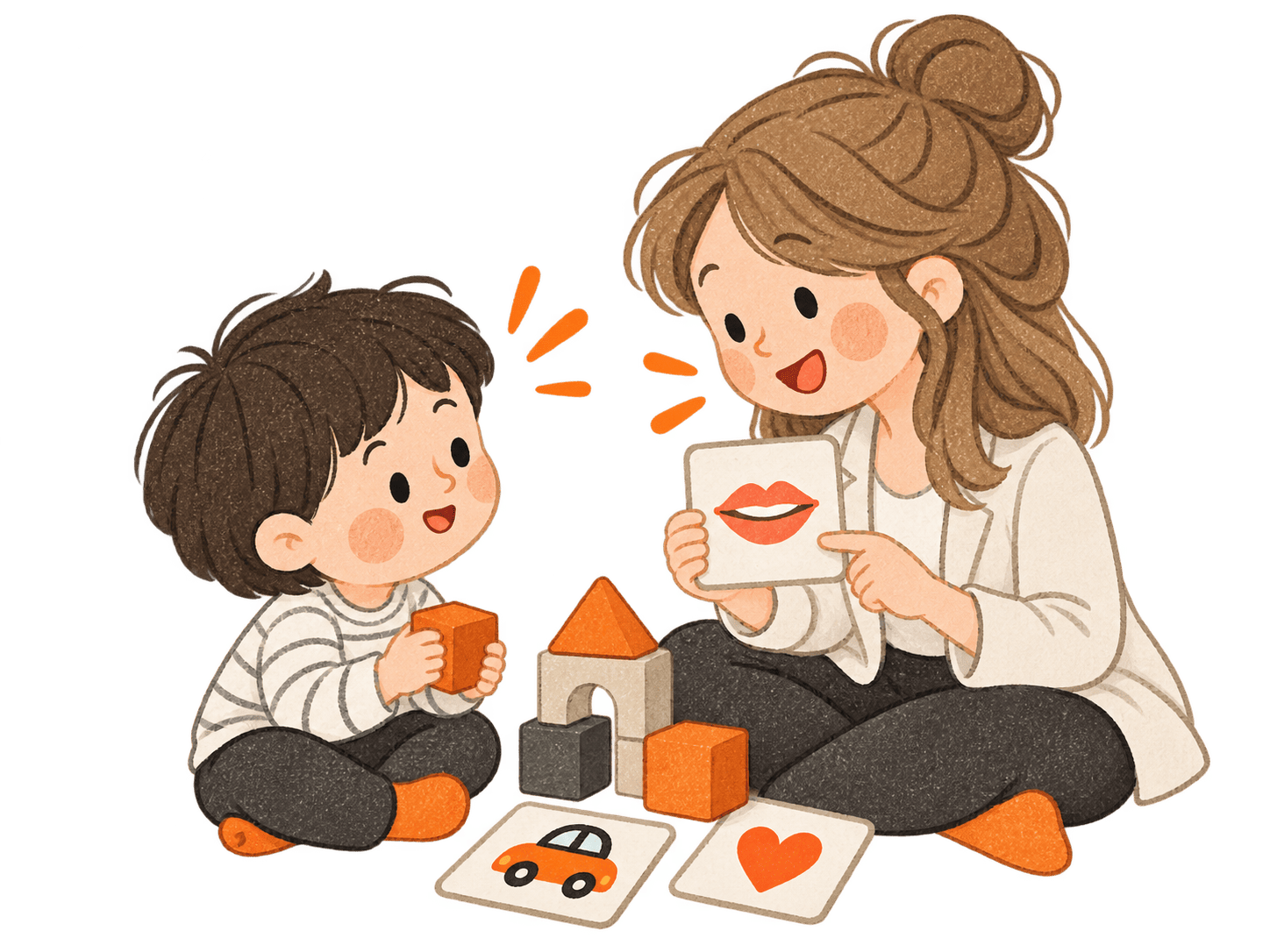
Sessions take place in a calm and friendly atmosphere. With younger children, I use play, games, books, illustrations and a variety of speech and language therapy materials. This makes the exercises interesting and engaging for the child, and allows new skills to develop naturally.


What does speech and language therapy involve?
Every course of therapy begins with a speech and language assessment, on the basis of which an individual plan is drawn up. The exercises are matched to the child's needs, age and abilities, and adapted as they progress.
Therapy may include:
- developing speech and vocabulary
- building sentences and longer utterances
- improving the pronunciation of speech sounds
- exercises for the tongue, lips and jaw
- work on breathing, swallowing and the resting position of the tongue
- developing phonemic awareness
- exercises to improve speech fluency
- preparation for learning to read and write
Sessions take place in a friendly atmosphere and often take the form of play, so that the child can practise without unnecessary pressure.
Working together with parents is also an important part of therapy. After each session, parents receive tips and short exercises to do at home, which help to consolidate new skills.
The length of therapy varies from child to child and depends, among other things, on the type of difficulty, the child's age, how often sessions take place and how regularly the exercises are practised.
The aim of therapy is not only to improve pronunciation, but above all to make it easier for the child to communicate freely and express their needs.
Have any questions?
Get in touch to arrange a consultation.